Valorant lowest to highest rank challenge explained as a test of smurfing skill or honest climb
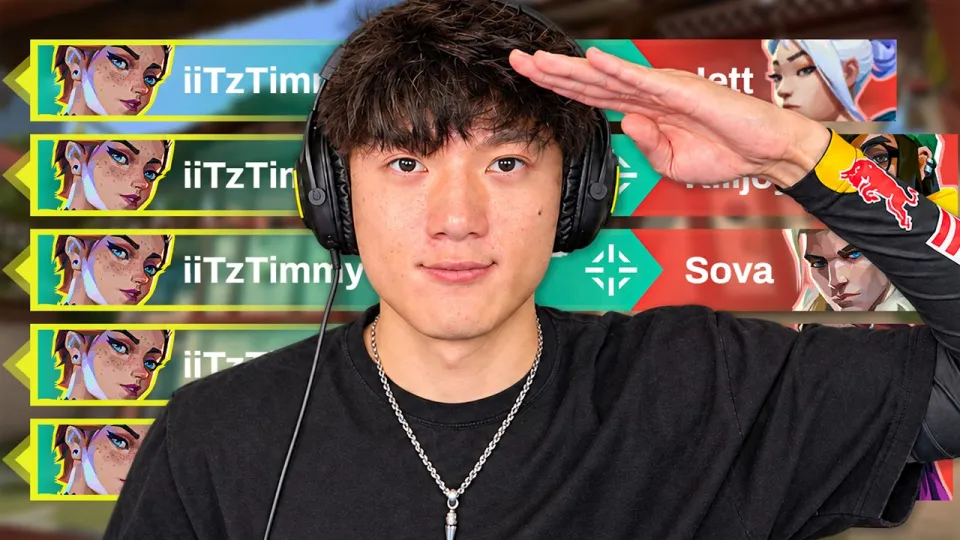
Video: I Might Be Getting TOO Good at Valorant… (Lowest To Highest Rank Challenge)
You can order the same kind of articles for your own video to boost it on YouTube and Google. Just message the Telegram bot @sat_sit_bot. Articles with your video embedded are written and posted by the bot itself — on popular topical sites (no ads). Your first 50 articles are free.
· based on the channel iiTzTimmy Two
Valorant's lowest to highest rank challenge is a format where a strong player starts from the bottom of the ladder and climbs as far as possible, and its real value is the contrast it creates: the same game looks completely different in Iron and in Radiant. In the iiTzTimmy Two video, that contrast is the point — the mechanics barely change, but the decisions around them do. If you want to watch the run live rather than through highlights, the place to start is iiTzTimmy's Twitch channel, where the full sessions air.
The format is not a guide to ranking up legitimately, and it should not be read as one. It is a demonstration: what a top-tier player does when the lobby gives him space, and what low-rank players do when they are given the same space and waste it.
What the Valorant lowest to highest rank challenge actually measures
The challenge measures decision speed, not raw aim. A Radiant-level player in a low lobby wins most duels before they start, because he already knows where the enemy will be and pre-aims the angle instead of reacting to it. The visible difference in a clip is the flick; the invisible difference is the six seconds of positioning that made the flick unnecessary.
Three things show up in almost every game of this type:
- Crosshair placement. Low-rank players aim at the floor or at wall height while rotating. The climbing player keeps the crosshair at head level on the next likely angle, so the first bullet lands without adjustment.
- Economy discipline. Saving as a team, forcing together, and buying for the next round instead of the current one decide more low-elo rounds than any individual clutch.
- Information handling. A player who tracks one piece of information — one smoke, one ultimate, one rotation — beats a player who tracks five and acts on none.
The challenge also exposes how thin the gap is between ranks in terms of pure gunskill. Most players in Silver and Gold can hit the shots; they lose because they take them from bad positions.
Where low-rank lobbies break down first
The first thing that collapses in a low-rank game is communication, and it collapses in a specific way: players invent information. A teammate calls a cage, a smoke, or a rotation that never happened, the team rotates on it, and the round is lost before anyone fires a shot. The same pattern shows up in the viewer reaction to the first match of the run, where a Cypher spends the game blaming the team for missing callouts he never gave clearly.
That is the most transferable lesson in the whole format. If you are stuck in Iron through Gold, audit your comms before your aim:
- Call only what you can see, and say "I don't know" when you can't see it.
- Give one piece of information per call, not a paragraph.
- Never call a rotation you are guessing at; call the guess as a guess.
A second failure point is ego peeking. Low-rank players re-peek the same angle after losing it, because losing the duel feels like a mistake to correct rather than information to use. The climbing player in the challenge does the opposite: he gives up space, resets, and takes a different angle on the next contact.
Agent picks that survive a full climb
The agents that work across the whole ladder are the ones that create their own information or their own escape. Duelists like Reyna and Jett are popular in low elo because they convert individual skill into round impact without needing teammates to coordinate, which is exactly what a smurf run exploits and exactly what a solo-queue player can copy.
On the other side, controllers and sentinels reward patience that low-rank lobbies rarely have. A Cypher or Killjoy who sets up and then leaves the setup to chase a fight is playing the agent wrong, and that mismatch is visible in the run's early games. The practical rule: pick the agent whose job you will actually do for the full 25 rounds, not the one with the highest ceiling on paper.
For players climbing legitimately, the safest pool is one duelist or initiator you can entry with and one sentinel or controller you can fall back on. Two agents, learned properly, beat five agents played at 60 percent.
Why a Radiant player looks unbeatable in Silver
A Radiant player looks unbeatable in Silver because the lobby gives him the two things he needs: time and predictable opponents. Low-rank players hold common angles, rotate on the first sound, and challenge fights they should not take, which turns every round into a sequence the climbing player has already rehearsed.
The effect compounds. Winning the first three rounds in a low lobby usually breaks the enemy team's economy and their patience at the same time, and by round eight the game is being played at the climber's pace. That is also why the challenge gets harder the higher it goes: Diamond and Ascendant lobbies stop giving free information, and the same player has to earn every opening.
This is the honest limit of the format as entertainment. The stomps are fun, but they teach less than the games where the climb slows down and the decisions become contested.
Common viewer questions about the climb
The questions viewers ask most about this kind of run are about settings, rank legitimacy, and whether the gameplay transfers to their own games. Sensitivity and DPI questions come up constantly, and the honest answer is that copying a pro's sensitivity rarely fixes anything — most players are better off keeping their current sensitivity and fixing crosshair placement first.
Another frequent question is whether a run like this counts as smurfing. It does, technically: a high-rank player on a low-rank account is playing outside his skill bracket, even when the account is fresh and the goal is content rather than rank. Riot's rules on account sharing and ranked integrity are the reason most creators frame these runs as entertainment rather than as a legitimate climb.
The third theme is transfer. Watching a Radiant player win a Silver lobby does not teach you to win a Silver lobby, because you are not playing against his opponents with his aim. What transfers is the structure: how he clears an angle, when he saves, and how he resets after a lost duel.
Useful links
- iiTzTimmy on Twitch — live streams of the full challenge runs.
- iiTzTimmy on Twitter — schedule and stream announcements.
- iiTzTimmy on Instagram — clips and behind-the-scenes posts.
- iiTzTimmy on TikTok — short highlights from the ranked grind.
- iiTzTimmy Discord — community, queue partners and stream pings.
The takeaway from the run
The lowest to highest rank challenge is best watched as a study of decisions rather than a highlight reel, because the aim on display is not something a viewer can copy in a week. What is copyable is the structure: hold the crosshair where the enemy will appear, save with the team, and call only what you can actually see. The format also makes clear that most low-rank losses start with a bad callout or a re-peek, not with a missed flick. The iiTzTimmy Two channel is the source of this breakdown, and the live version of the climb continues on Twitch if you want to see the higher ranks get contested.
Key takeaways
- The lowest to highest rank challenge means starting a fresh Valorant account in Iron and climbing toward Radiant.
- iiTzTimmy Two frames the run as a skill check, not a tutorial: the question is how fast a top-tier player dismantles low lobbies.
- Low-elo games are decided by fundamentals (crosshair placement, economy, comms) more than by agent picks.
- Tilt and invented callouts from teammates are the most common reason low-rank games slip away.
- Watching a Radiant player climb is useful only if you copy the decisions, not the aim.
Source: I Might Be Getting TOO Good at Valorant… (Lowest To Highest Rank Challenge) · Markdown version
Questions & answers
Is the Valorant lowest to highest rank challenge the same as a normal ranked climb?
No. A normal climb starts from your own rank and skill level, while this format starts a high-rank player at the bottom of the ladder. That makes the early games a demonstration of skill gap rather than a realistic picture of what an Iron or Silver player faces.
Does watching a Radiant player stomp low lobbies help me rank up?
Only if you copy the decisions and not the aim. Look at crosshair placement, when the player saves, and how he resets after a lost duel. The flicks are the result of those habits, not a shortcut to them.
What sensitivity or DPI does the player use in the run?
Settings questions come up constantly in the comments, but sensitivity is personal and copying it rarely fixes a rank. Keep your current sensitivity and fix crosshair placement and economy first, since those change results faster than any DPI swap.
Why do low-rank teams lose rounds before the first shot?
Usually because of invented callouts and ego re-peeks. Players call rotations and utility they cannot see, the team commits to it, and the round is gone. Calling only confirmed information fixes more rounds than aim training does.